History remembers the charges. Damian wants to remember the boys.
When writer Damian Jay Clay is drawn into the company of Karl Heinrich Ulrichs – the nineteenth-century pioneer who first dared to argue publicly for the rights of men who loved men – history stops being something safely contained in books.
Karl takes him backwards.
To boys condemned by courts. To confessions manufactured under torture. To lovers whose names survive only because the state once wrote them down.
To moonlit rivers, prison cells and execution grounds. And finally to Nazi Germany, where a sixteen-year-old boy called Kurt Weber believes that if the police come, he and his boyfriend simply have to run faster.
Damian cannot change what happened.
He can only witness it.
But the deeper he travels into the forgotten history of homosexual persecution, the harder witnessing becomes. What does it mean to remember someone whose life survives principally through the machinery that destroyed him? Can an archive preserve a life without imprisoning it inside the manner of its death?
And if history gives the murderers the final word, what right does a writer have to answer back?
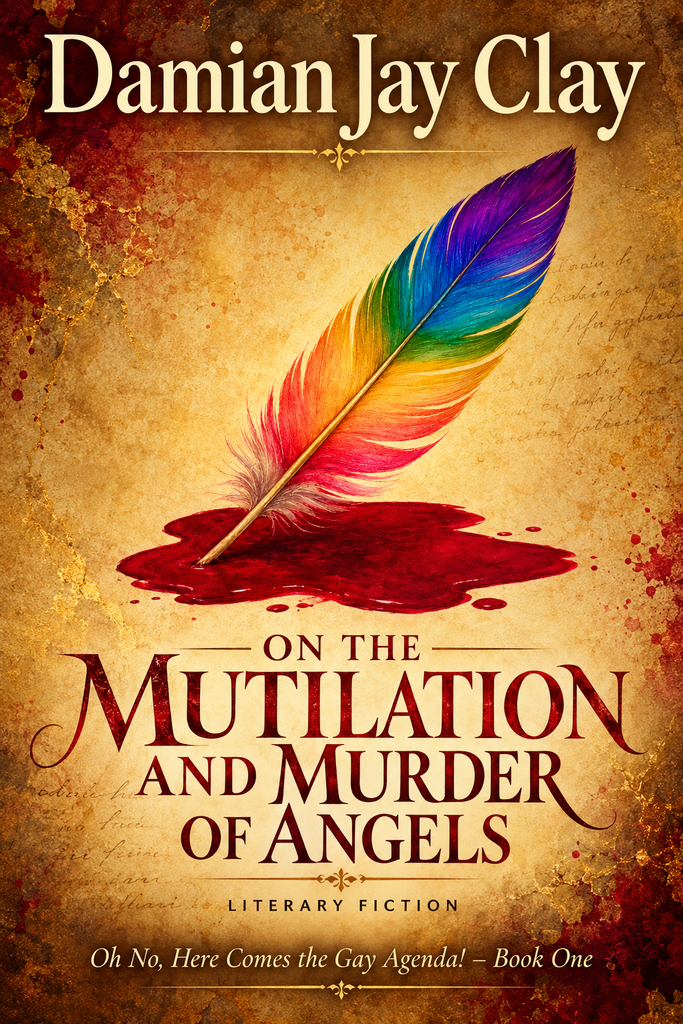
Fierce, intimate and darkly funny, On the Mutilation and Murder of Angels is a historical novel about love criminalised, truth manufactured by power, and the fragile lives that survive between the lines of the historical record.
Above all, it asks one stubborn question:
Who gets to decide how a life ends?